
 General Compute
General Compute rents dedicated racks of inference silicon to companies running AI models at high volume.
- Category
- Deep Tech
- Fund
- NZVC II
- Website
- www.generalcompute.com
- On TechMates
- 2 episodes

What General Compute does

General Compute splits the work so the prefill stage runs on GPUs and the decode stage runs on chips built for it. Decode is where a GPU stalls, because generating one token at a time is limited by memory bandwidth rather than by compute, and that ceiling is what caps how fast an agent gets through a task of hundreds or thousands of model passes. Finn Puklowski and Jason Goodison built the company around SambaNova's SN50 accelerators and were the first neocloud to deploy them, and because those chips are air-cooled and draw less power, a rack goes into a data center that already exists rather than one that has to be built.
The secret
The constraint on AI capacity is buildings and cooling, not chips. Because the inference silicon is air-cooled, it goes into colocation space that already exists, while a liquid-cooled GPU build waits on a site to be constructed first.
Why NZVC invested in General Compute
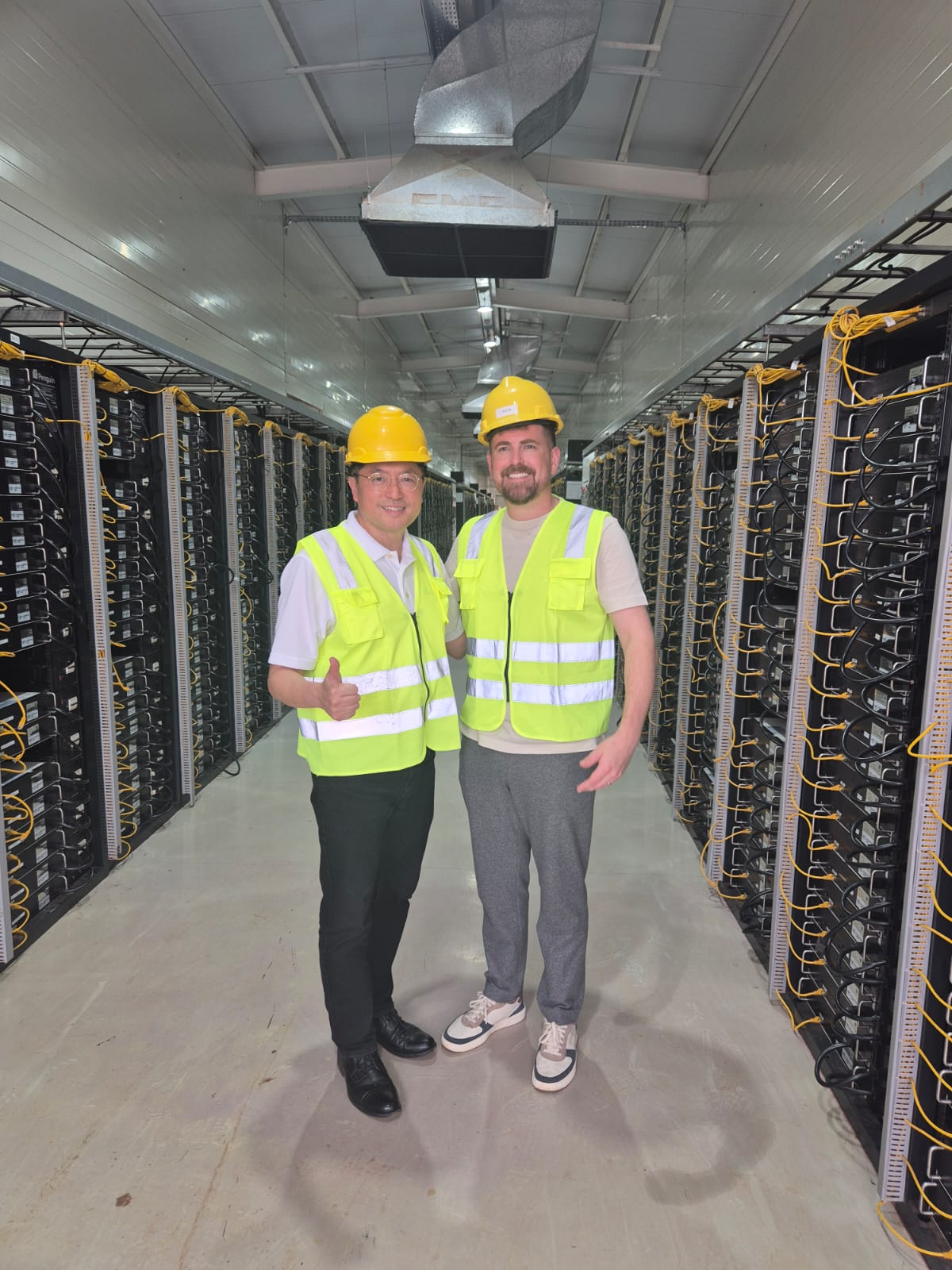
We were the first money into General Compute, in from the month Finn Puklowski and Jason Goodison started it. The bet was that agents would change the economics of inference. A chat turn is one pass through a model and an agent run is hundreds or thousands in sequence, so latency stops averaging out and starts adding up into wall-clock time. Puklowski and Goodison bought the chips and the racks and did the bring-up themselves rather than reselling somebody else's capacity.
General Compute in the press



- Upper90 committed a facility of up to $400 million to General ComputeTechCrunch, Data Center Dynamics, WebWire · 17 July 2026
- NBR reported New Zealand investors being offered a stake in General ComputeNBR · 30 June 2026
- TechCrunch put General Compute among the contenders in AI computeTechCrunch · 28 May 2026
General Compute on TechMates

In 5 Years, Every Kid Will Have an AI Teacher
You hear a founder whose own hearing loss led him to build avatars that sign a children's book in real time. Then you follow AI teaching up the ladder, from a personal tutor built for one child to avatars standing in for Ivy League professors to a company that shipped 40 AI projects to production. You leave with one question: would you trust an AI to teach your child?
A joint episode, alongside Kara Technologies.
General Compute on TechMates

How AI Is Revolutionizing Language Learning
You hear how a high school dropout who went bankrupt in his twenties built a language platform with 35 million followers. Finn Puklowski explains why Brazil, why creators, and how AI changes what teaching looks like.
- Lessons from bankruptcy to breakthrough.
- Why Brazil was the perfect market.
- Scaling to $10M revenue bootstrapped.